Roof Leak During a Storm in Lakeland, FL: What to Do Right Now
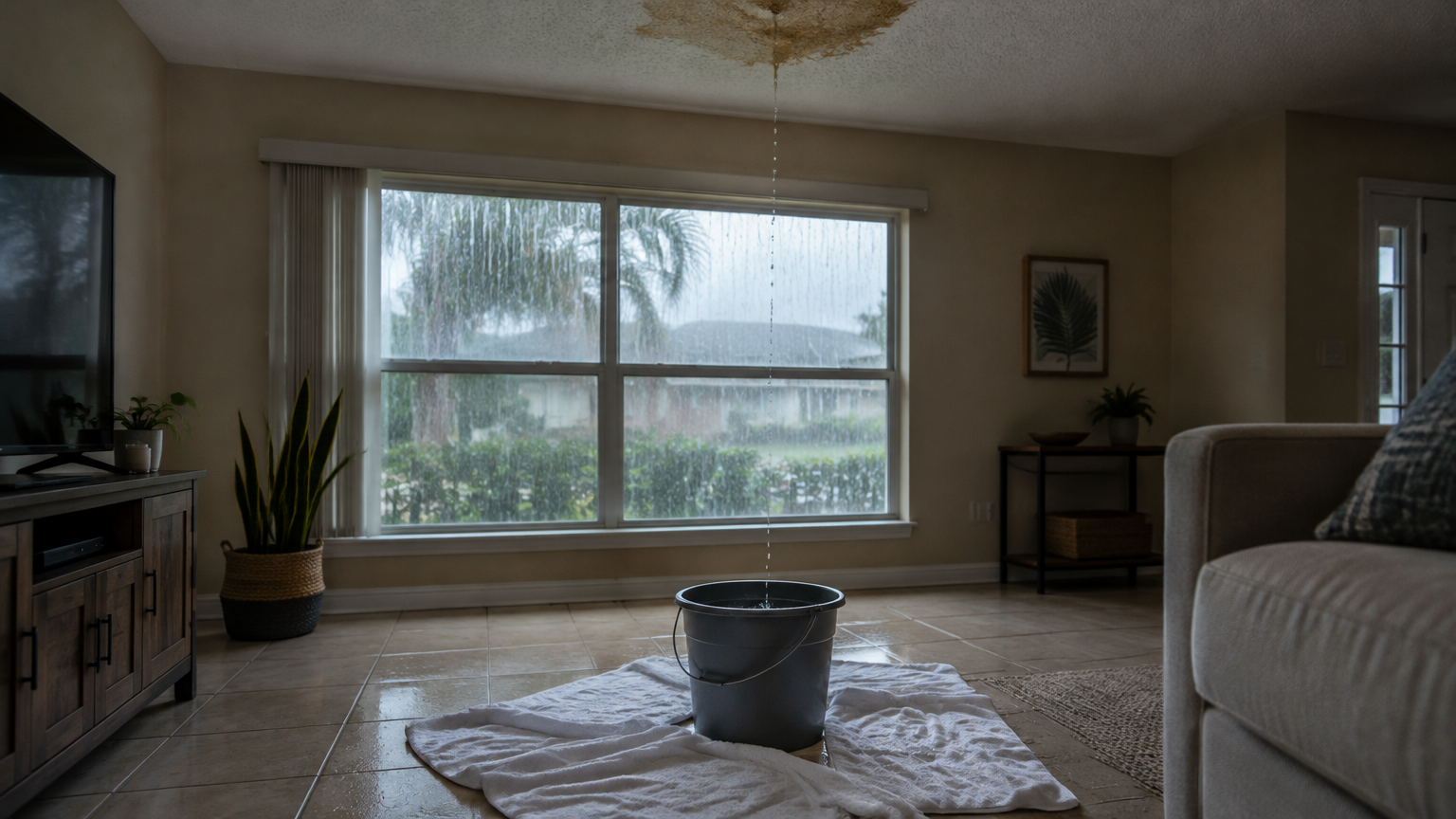
Rain is hammering down, the wind is picking up, and then you hear it: a steady drip somewhere inside the house. A roof leak during a storm in Lakeland is stressful because nobody can fix a roof while the weather is still bad, and the water keeps coming. The good news is that there's a lot you can do from inside the house to limit the damage and stay safe. Here's a step-by-step plan, plus when to call for emergency roof tarping and interior drying.
Why Roof Leaks Show Up During Lakeland Storms
Lakeland and the rest of Polk County get heavy afternoon thunderstorms through much of the year, plus the occasional tropical system. Wind-driven rain pushes water sideways under shingles and around flashing in ways a normal shower never does. These are some of the most common culprits:
- Shingles or tiles lifted or torn off by wind
- Cracked or loose flashing around vents, chimneys, and skylights
- Branches or flying debris puncturing the roof
- Clogged gutters sending water back under the roof edge
- Older roofing that has worn thin after years of Florida sun
Sometimes a leak has been building quietly for a while, and a big storm is simply what finally pushes water through the ceiling.
What to Do About a Roof Leak During a Storm in Lakeland
1. Put safety first
Never go up on the roof or into the attic while it's still storming. Wet roofs are slippery, wind gusts are unpredictable, and lightning is common in Central Florida storms. If water is dripping near light fixtures, outlets, or ceiling fans, turn off the breaker for that area if you can reach the panel without standing in water. If a ceiling is sagging or bulging, keep everyone out of that room.
2. Catch and contain the water
Set buckets, pots, or storage bins under drips and lay towels around them to catch splashes. Move furniture, electronics, rugs, and anything valuable out of the way, or cover them with plastic sheeting. If water is pooling in a sagging spot on the ceiling, it's safer to leave it alone and let a professional assess it than to poke at it yourself.
3. Document everything
Take photos and video of the leak, the ceiling, wet floors, and damaged belongings as soon as it's safe. Once the weather clears, photograph any visible roof damage from the ground. Our water damage insurance claim guide covers what's helpful to record.
4. Call for help as soon as the weather allows
Once the storm passes, the priority is covering the opening before the next round of rain. OnSite Mitigation & Restoration provides 24/7 emergency roof tarping in Lakeland and across Polk County to help keep more water out while repairs and insurance get sorted out.
How Emergency Roof Tarping Helps After a Storm
A tarp is temporary protection, not a roof repair. Its job is to cover the damaged area so more rain can't get in while you line up a roofer and talk with your insurer. A proper tarp extends past the damaged section and is secured so wind and runoff can't easily lift it. Our guide to roof tarping in Winter Haven, FL explains how a roof is properly tarped, and what happens after emergency roof tarping walks through the days that follow.
It's tempting to climb up with a tarp from the hardware store, but storm-damaged roofs can hide weak spots and loose materials. A fall is a much bigger problem than a leak.
Don't Forget the Water That Already Got In
Stopping the leak is only half the job. Rain that came through the roof can soak attic insulation, ceiling drywall, wall cavities, and flooring. Even after the dripping stops, those materials can stay damp for days. In Lakeland's humidity, that trapped moisture can lead to stains, odors, and mold.
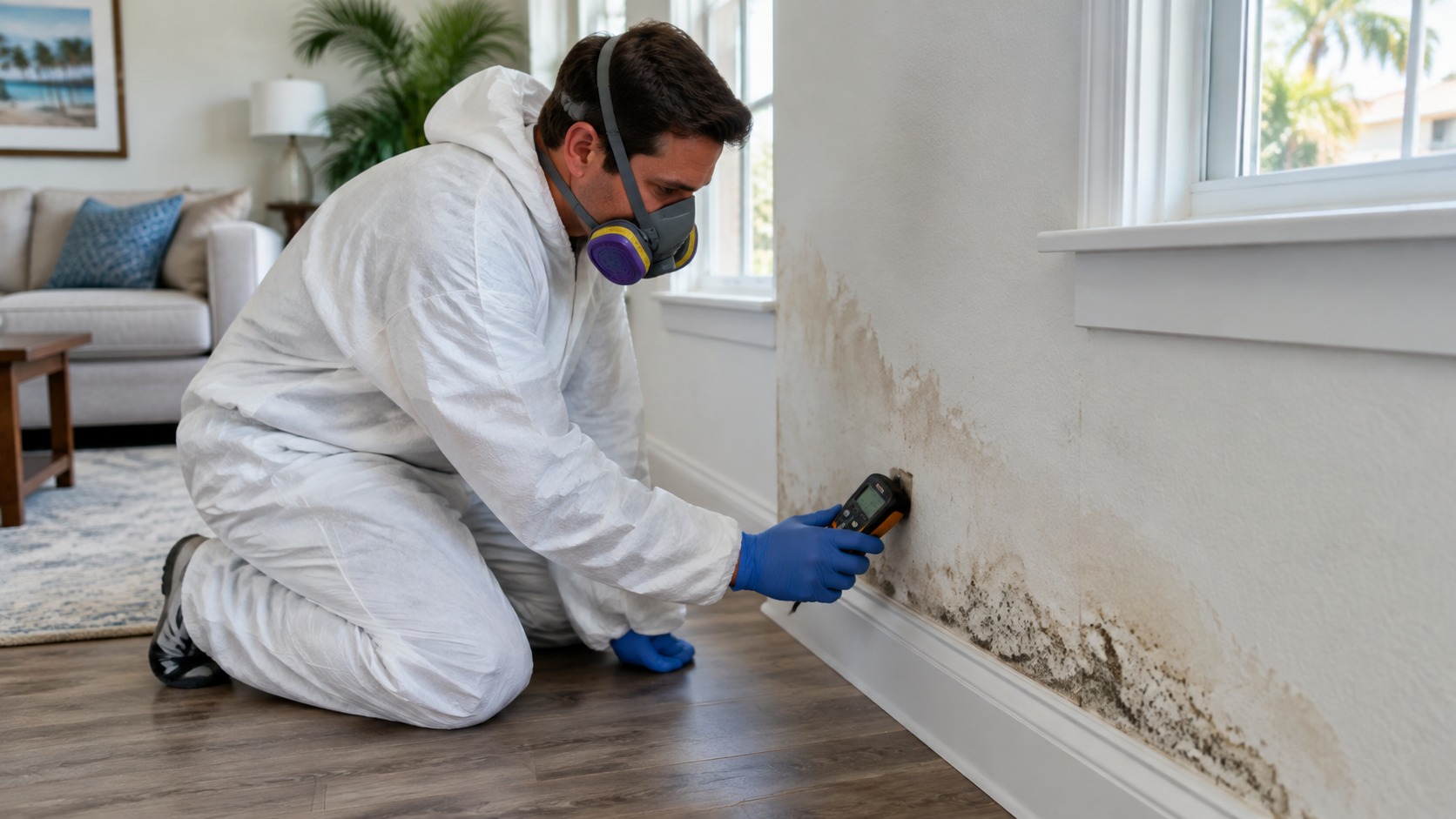
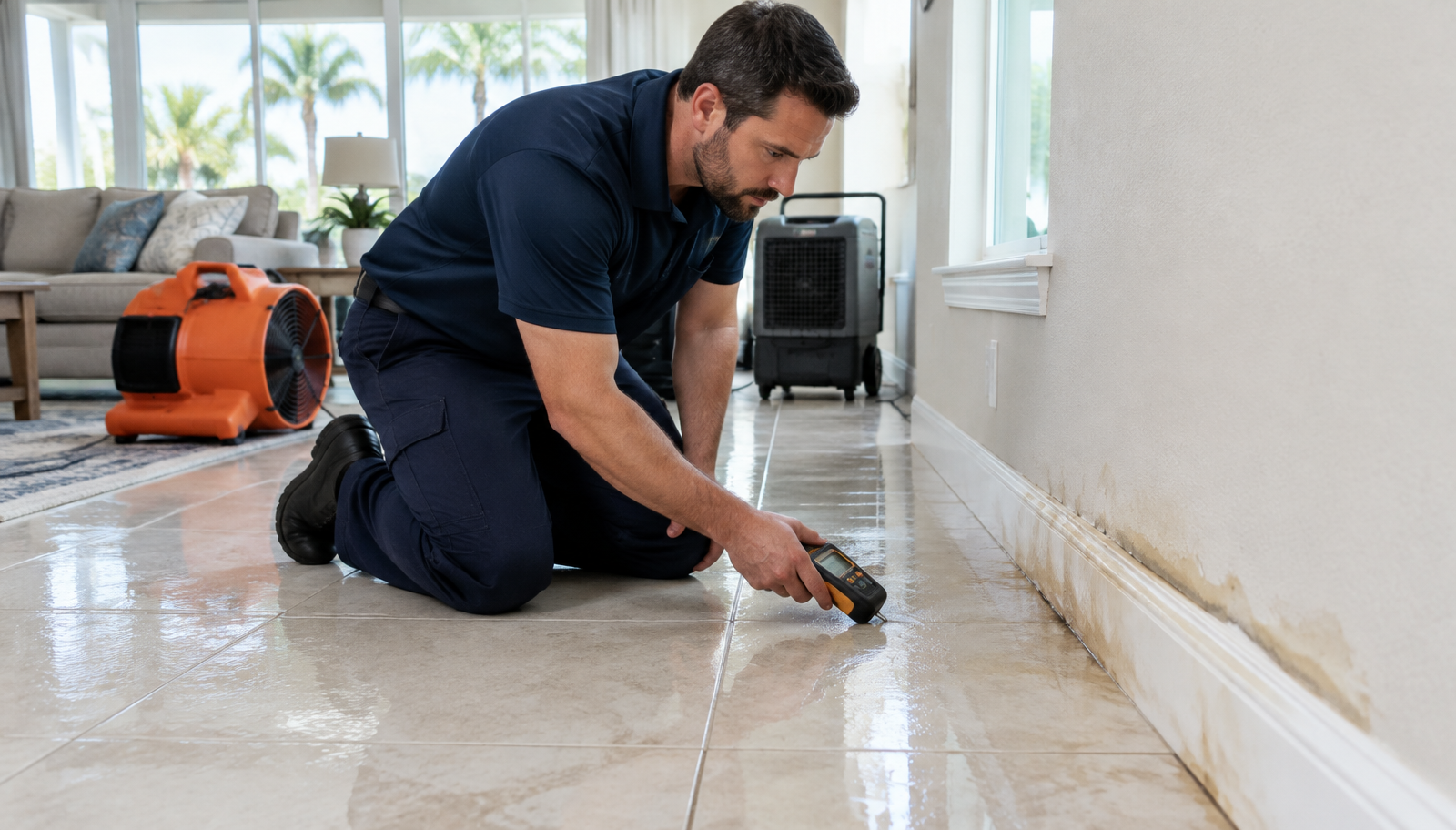
Professional water damage restoration uses moisture meters and drying equipment to find wet areas you can't see and dry them properly. Our guide on the first 24 hours after a flood explains why early drying matters so much.
Keep an eye on the attic
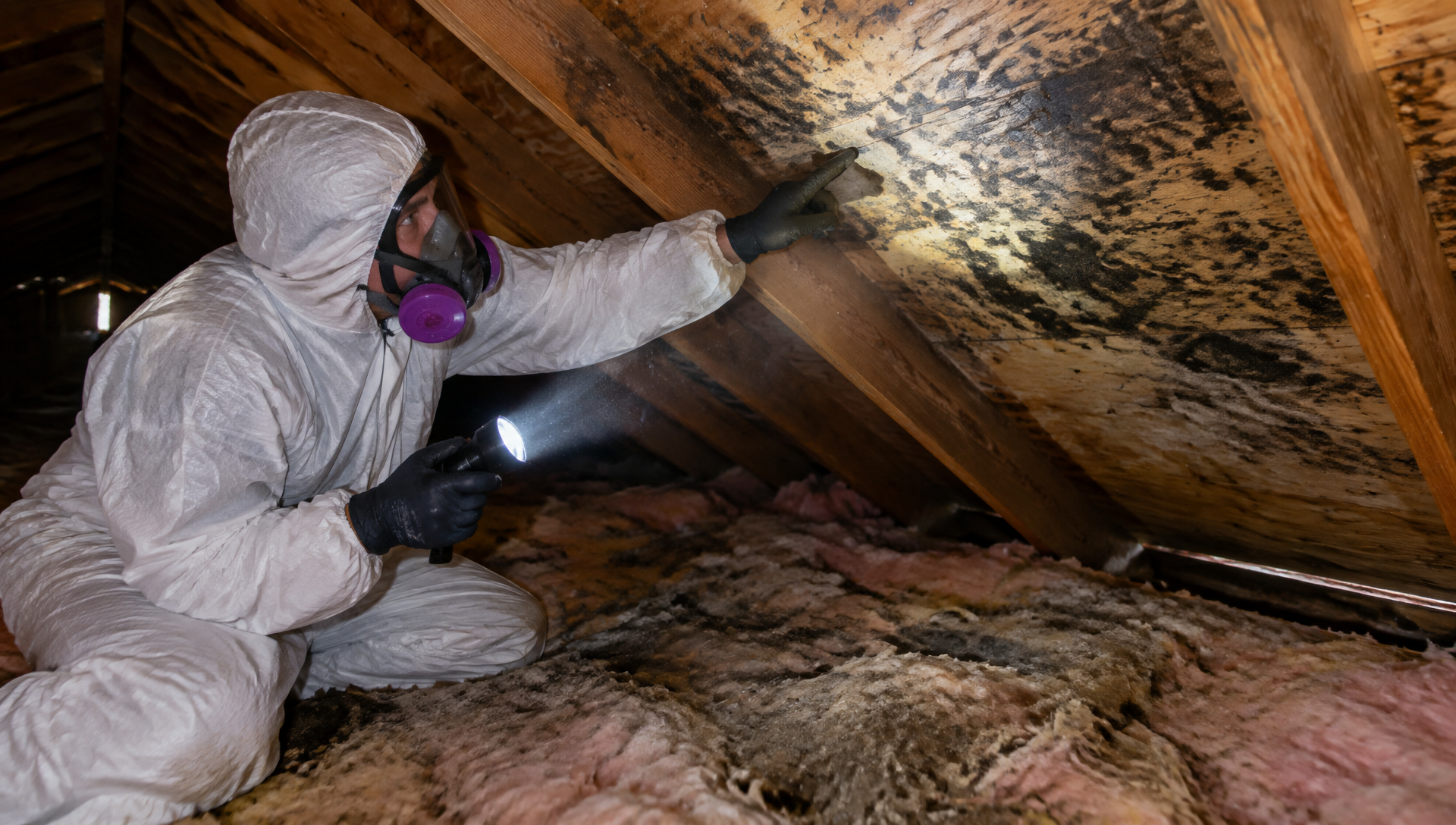
The attic usually takes the first hit. Wet insulation and damp roof decking are a common starting point for mold. If you notice a musty smell upstairs or dark staining on the decking in the weeks after a storm, read our post on attic mold in Florida homes and consider a professional mold inspection. The signs of hidden mold are worth knowing too.
When storm water isn't clean
If heavy rain also caused drains or toilets to back up, or outside floodwater came into the home, that water may be contaminated. It calls for the protective steps used in sewage and biohazard cleanup, not a mop and bucket.
Getting Ready Before the Next Storm
- Clear gutters and downspouts so water drains away from the roof edge
- Trim branches that hang over the roof
- Have the roof checked after major storms, even if you don't see a leak
- Know where your electrical panel and main water valve are
- Keep buckets, plastic sheeting, and towels where you can find them fast
Our hurricane season prep checklist for Polk County has a full before, during, and after plan for Lakeland, Winter Haven, and nearby communities.
Does Insurance Cover a Storm Roof Leak?
It depends on your policy and what caused the leak. Sudden storm damage is often treated differently from leaks caused by wear, age, or maintenance issues, and mold or contaminated water may come with their own limits or exclusions. Call your insurance company, ask what your specific policy covers, and keep your photos, invoices, and notes together.
Frequently Asked Questions
Can a roof be tarped while it's still raining?
Tarping usually waits until the storm has passed and conditions are safe. Lightning, high wind, and slick surfaces make roof work dangerous. In the meantime, focus on catching water and protecting your belongings inside.
Should I wait for my insurance adjuster before tarping?
Many policies expect homeowners to take reasonable steps to prevent more damage. Document the damage first with photos, then check with your insurer about their requirements. Covering the roof promptly can help keep the damage from getting worse.
How do I know if my ceiling is wet inside?
Stains, bubbling paint, sagging, or a soft spot are common signs. Moisture can also spread where you can't see it, so a professional moisture check is the best way to know for sure.
Dealing with a roof leak during a storm in Lakeland? Call OnSite Mitigation & Restoration at (863) 347-3029 for 24/7 help in Lakeland, Winter Haven, Auburndale, Bartow, Haines City, Lake Wales, and across Polk County. Our locally owned team can tarp the damaged roof, check for hidden moisture, and dry out your home. You can also request service online.
Contact Onsite Mitigation & Restoration Today
Damage doesn't wait for a convenient time — and the sooner it's addressed, the better the outcome for your home. We proudly serve Winter Haven and all of Central Florida, ready to respond 24/7.